

316 vs 304 Stainless Steel Water Features | DIYMegaStore
▶ Water Wall Buying Guide • Updated July 2026
316 vs 304 Stainless Steel Water Feature: Which Grade Is Worth the Extra Cost?
Choosing between 316 and 304 grade stainless steel for your water feature or spillway is one of the most important material decisions you’ll make — and the wrong choice can cost you far more in repairs and replacements down the track. This guide breaks down the real differences, what they mean for Australian conditions, and which grade belongs in your project.
☰ In This Guide
- What is 304 Grade Stainless Steel?
- What is 316L Marine Grade Stainless Steel?
- Head-to-Head: Key Differences at a Glance
- Tea Staining & Water Quality: What to Expect
- Which Grade Is Right for Your Application?
- Cost Comparison: Is 316 Worth It?
- FAQ — Frequently Asked Questions
- Our Recommendation
What Is 304 Grade Stainless Steel?
304 stainless steel is the world’s most widely used stainless alloy, and for good reason. Its composition — 18% chromium and 8% nickel — delivers solid corrosion resistance, a clean brushed finish, and an accessible price point that suits a wide range of indoor water features and fountains.
For many standard indoor water features, 304 performs reliably and offers excellent value. The challenge comes when it’s exposed to chlorinated water (pools), coastal salt air, or prolonged outdoor humidity — conditions extremely common across Australian backyards and commercial projects.
✓ Advantages of 304
- More affordable upfront cost
- Excellent for most indoor applications
- Performs well outdoors inland with fresh water, provided it's kept clean
- Wide range of sizes & styles available
- Good corrosion resistance in clean, fresh water
- Strong & hard — resists surface scratches well
⚠ Limitations of 304
- Vulnerable to chloride & saltwater corrosion
- Can rust or pit in high-humidity outdoor settings
- Not ideal near pools, spas, or the coast
- Higher carbon content can cause weld-point corrosion
- Needs regular cleaning outdoors — performance drops if neglected
What Is 316L Marine Grade Stainless Steel?
316L is the premium choice for water features that need to perform in demanding environments. Its formula — 16% chromium, 10% nickel, and 2–3% molybdenum — is what sets it apart. That molybdenum addition is the game-changer: it dramatically increases resistance to chlorides, saltwater, and the harsh Australian outdoor environment.
The “L” designation means low carbon content, which minimises a phenomenon called sensitisation — corrosion that can occur at weld points during fabrication. This makes 316L a safer bet for fabricated spillways and custom water walls where precision welding is involved.
✓ Advantages of 316L
- Superior chloride & saltwater corrosion resistance
- Ideal for poolside, coastal & outdoor settings
- Low carbon content = safer welds, fewer weak points
- Longer service life in harsh Australian conditions
- Preferred for commercial & architectural installs
⚠ Limitations of 316L
- Higher upfront cost vs 304
- Slightly softer — marginally more prone to surface scratches
- Can still develop cosmetic tea staining in harsh water conditions (see below)
- Overkill for sheltered, dry indoor environments
Head-to-Head: 316 vs 304 Stainless Steel Water Feature — Key Differences
| Feature | 304 Grade | 316L Marine Grade |
|---|---|---|
| Chromium % | 18% | 16% |
| Nickel % | 8% | 10% |
| Molybdenum | ✗ None | ✓ 2–3% |
| Chloride Resistance | Moderate | High ★★ |
| Saltwater / Coastal | ✗ Not recommended | ✓ Excellent |
| Poolside / Chlorine | ⚠ Risky long-term | ✓ Recommended |
| Inland, Fresh Water Outdoors | ✓ Fine, if maintained | ✓ Excellent |
| Tea Staining Risk | Higher | Lower (cosmetic only) |
| Indoor Water Features | ✓ Great choice | ✓ Excellent (but overkill) |
| Weld Safety (Low Carbon) | Standard | Superior (316L) |
| Relative Cost | $ Lower | $$ Higher |
| Long-Term Durability (Outdoors) | Moderate–Good, if maintained | Excellent ★★★ |
Tea Staining & Water Quality: What to Expect With 316L
316L’s molybdenum content makes it dramatically more resistant to structural corrosion than 304 — but it’s worth understanding one thing 316L doesn’t fully eliminate: tea staining, a light brown or rust-coloured surface discolouration that can appear on any stainless steel around pools, coastal air, or high-chloride environments.
What tea staining actually is
Tea staining is a surface-level cosmetic effect only — it is not the same as pitting or structural corrosion, and it doesn’t affect the strength or lifespan of the spillway. It occurs when fine iron or chloride particles from the surrounding environment settle on the steel and react with moisture, leaving a light brown deposit on the surface. It affects appearance, not integrity.
Both 304 and 316L can tea-stain. The difference is exposure threshold: 316L’s molybdenum gives it meaningfully higher resistance, so it takes a harsher or more sustained chloride environment to produce the same staining you’d see on 304 — but in a genuinely harsh setting (heavily salted pools, direct coastal exposure, or poor water balance) even 316L isn’t immune.
The factor that matters most for pool owners specifically is water chemistry, not just chlorine type. Here’s what increases the risk, and what keeps it low:
⚠ What increases tea staining risk
- Salt-chlorinated pools — dissolved salt levels run considerably higher than plain chlorinated water
- Free chlorine running consistently high, or shock-dosing landing directly near the spillway
- pH drifting outside the normal balanced range
- Deposits left to dry on the surface without being rinsed off
- Proximity to the coast, where salt-laden air adds an additional chloride source
✓ How to keep it looking bright
- Keep free chlorine within the normal residential operating range (roughly 1–3 ppm)
- Keep pH balanced (roughly 7.2–7.6) — standard good pool practice
- Rinse the spillway with fresh water periodically, especially in salt pools or coastal settings
- Wipe with a soft cloth in the direction of the grain if any discolouration appears — never circular motions or abrasive pads
- Specify 316L over 304 for any pool, coastal, or high-chloride install — it substantially raises the bar before staining occurs
▶ The key takeaway
Tea staining is a maintenance and water-balance consideration — not a reason to reconsider 316L. It remains the right material choice for pool and coastal installs; keeping your pool chemistry balanced and giving the spillway an occasional rinse is genuinely all it takes to keep it looking its best.
Which Grade Is Right for Your Application?
The “best” stainless steel depends entirely on where your 316 vs 304 stainless steel water feature will live. Here’s a quick-reference guide for Australian conditions:
Indoor Water Features & Water Walls
Recommended: 304 Grade — A sheltered indoor environment with clean tap water is exactly where 304 shines. It’s durable, looks stunning, and saves you money without sacrificing performance. A great entry point for residential living rooms, foyers, and office spaces.
Poolside Spillways & Pool Water Features
Recommended: 316L Marine Grade — non-negotiable. Chlorinated pool water is highly corrosive to 304 grade steel over time. You’ll see surface pitting, rust spotting, and potential structural weakening within a few years. Always specify 316L for any spillway that contacts, overhangs, or sits near a swimming pool. Note that even 316L can develop cosmetic tea staining in salt-chlorinated pools — this doesn’t affect performance, and balanced pool chemistry keeps it minimal (see above).
Coastal & Beachside Properties
Recommended: 316L Marine Grade — essential. Salt air is relentless. Even 50km from the beach, salt particles carried by sea breezes will attack 304 stainless over time. For any coastal Australian property, 316L is the only grade that holds up long-term and protects your investment.
Outdoor (Non-Coastal) Water Features
Recommended: 304 Grade is fine for fresh water, well-maintained installs — 316L for extra peace of mind. For an inland, non-coastal water feature running fresh (not chlorinated or salted) water, 304 performs well long-term provided it's kept clean and isn't left to sit with stagnant water, debris, or mineral build-up on the surface. Regular rinsing and the occasional wipe-down are enough to keep it looking good for years. If the feature will be neglected, run with poor water quality, or you simply want the lowest-maintenance option and don't mind the extra cost, 316L is the safer upgrade — but for a well-cared-for inland fresh water feature, 304 is a legitimate, cost-effective choice, not a compromise.
Commercial & Architectural Installations
Recommended: 316L Marine Grade — always. Replacement costs, labour, and business disruption make 316L a clear commercial decision. High-traffic spaces, hotel lobbies, retail precincts, and restaurants demand a material that performs without fail for decades.
Cost Comparison: Is 316L Actually Worth It?
316L marine grade stainless steel typically costs more than equivalent 304 products. On a single spillway blade, that difference might be $50–$200. For a ready to finish water wall kit with multiple spillways, pump, through and fittings, the price difference can range from a few hundred dollars, depending on the size and configuration you choose.
But here’s the maths that matters: if a 304 spillway installed near a pool or the coast develops rust spotting or corrosion within 3–5 years, you’re looking at the full cost of replacement — product, labour, and possible wall repair. That figure makes the upfront premium on 316L look like a bargain in those environments. For a well-maintained inland fresh water feature, though, 304 typically won’t hit that failure point at all — so the value equation genuinely depends on where and how the feature will be used.
▶ The DIYMegaStore Rule of Thumb
If your water feature is near a pool, on the coast, or you want the lowest-maintenance option — choose 316L. If it’s an inland, dry, sheltered indoor installation, or an outdoor fresh water feature you’ll keep clean — 304 is a smart, cost-effective choice. When in doubt, or if maintenance isn’t something you'll stay on top of, go 316L.
Frequently Asked Questions
★ Our Recommendation
Both 304 and 316L stainless steel have a legitimate place in the world of water features. The decision comes down to your environment, your budget, and how long you want your installation to last:
- Indoor, sheltered water features: 304 Grade is a great, cost-effective choice.
- Inland, fresh water outdoor features: 304 Grade performs well long-term as long as it's kept reasonably maintained — a genuinely solid, budget-friendly option, not a compromise.
- Poolside or coastal water features: 316L Marine Grade is the safe default and our non-negotiable recommendation — balanced pool chemistry and occasional rinsing keeps it looking its best.
- Commercial & architectural projects: Always 316L — protect your investment and your client’s expectations.
At DIYMegaStore, we stock both grades across our full range of water blade spillways, water wall kits, and water feature components. Whether you’re building a sleek indoor feature or a bold poolside water wall, we have the right specification for your project.
Ready to Choose the Right Grade?
Browse our full range of 304 and 316L marine grade stainless steel water spillways, or call our team on 1300 238 288 for expert advice on your project.
▸ Related Guides
Written by the DIYMegaStore Team — Australia’s water feature specialists. | Last updated: July 2026
Recent Posts
-
Pond Vacuums Explained: Easy Pond Cleaning | DIYMegaStore
Pond Vacuum Buying Guide Pond Vacuums Explained: The Easy Way to Keep Your Pond Clean No draining, …4th Sep 2026 -
BBA PurePond Complete Range Guide — Which Product Does Your Pond Need?
Australian Made & Owned BBA Biosolution PurePond Complete Range Guide Australia's most conce …22nd Jun 2026 -
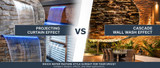
Projecting Curtain Effect vs Wall Wash Effect Water Walls: Which One is Right for You?
Water Wall Buying Guide Projecting Curtain Effect vs Wall Wash Effect Water Walls: Which One is …22nd May 2026